Windows 11 Could Soon Launch Firefox Links More Quickly
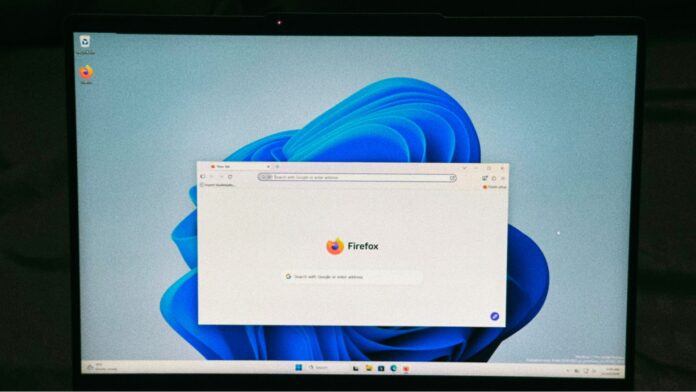
Firefox users on Windows 11 may soon benefit from faster browser launches. Mozilla is developing a change that would allow Windows 11 to send links and Start menu launch requests directly to an existing Firefox window. In an early test, Windows handed a link to the browser in approximately 3 milliseconds instead of 70 milliseconds.
MS initially developed this capability for its Edge browser. The feature was tested in October while it remained limited to Release Preview Insiders. It has since been enabled on standard PCs through the optional KB5127936 update released in late October, and it works largely as intended.
Firefox Is Testing Launches Without Another firefox.exe Process
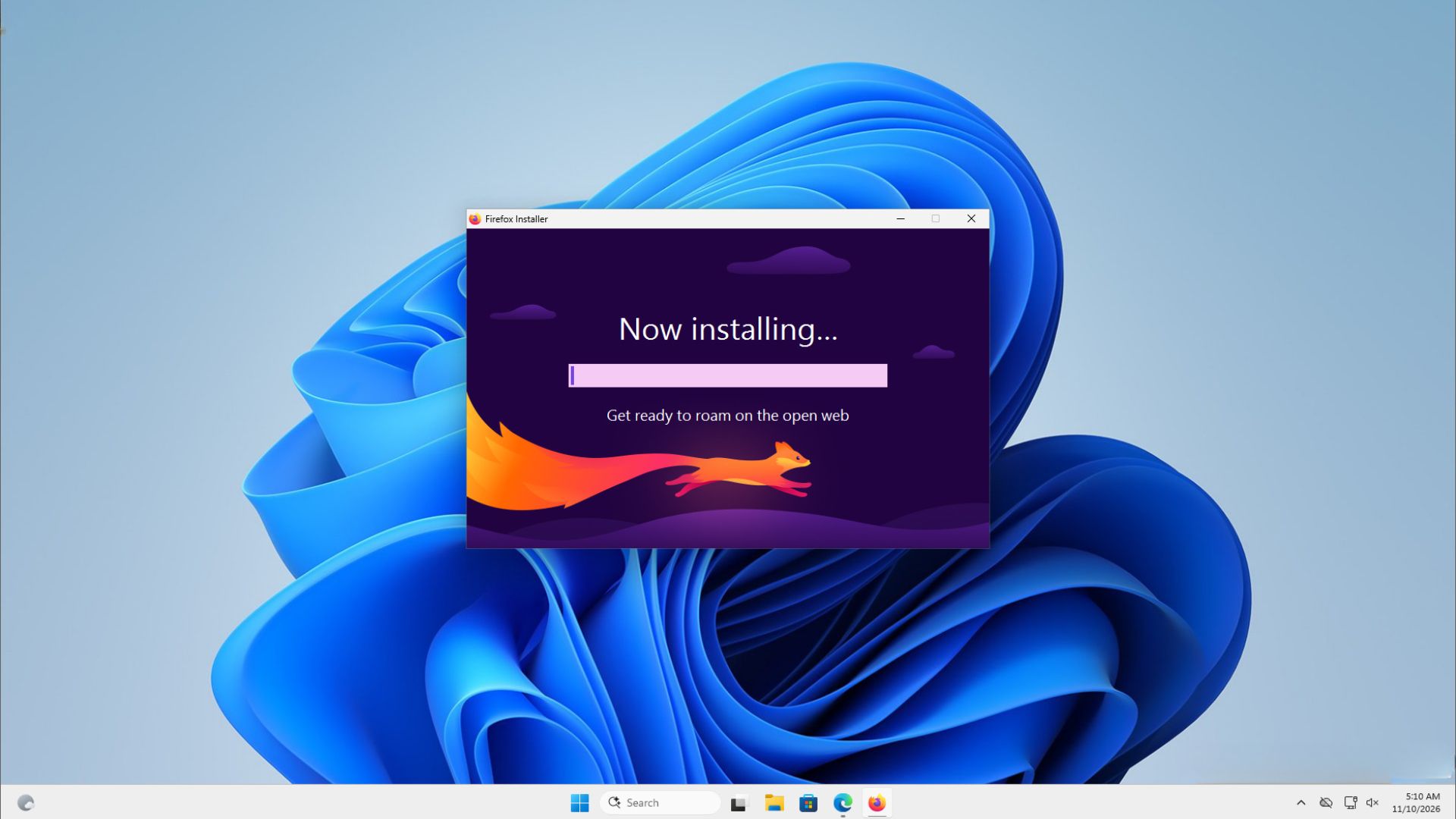
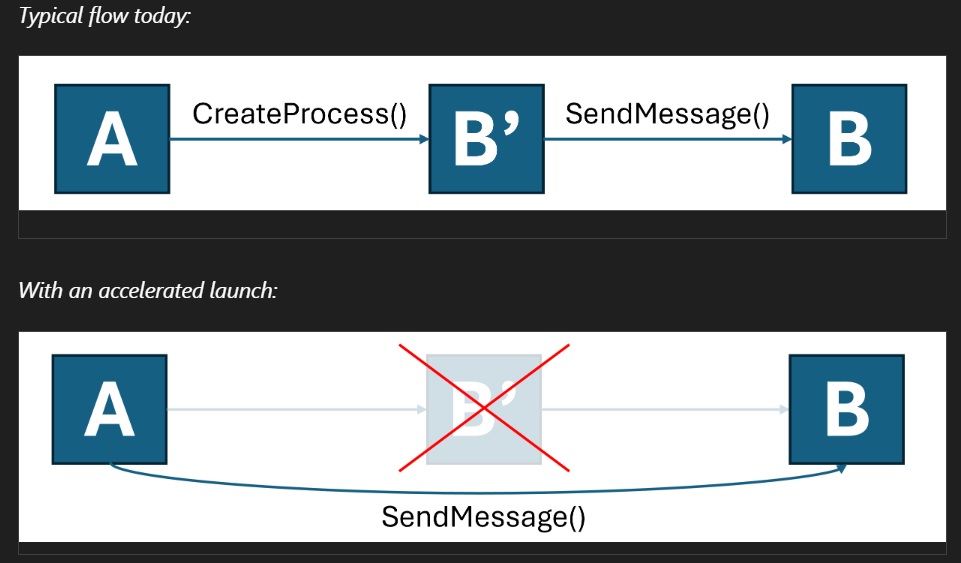
Currently, when Firefox is already running and a user clicks a link in another application—or launches Firefox from the Start menu or taskbar—Windows starts a new firefox.exe process. That temporary process, including the launcher, locates the existing Firefox instance, forwards the request, and then exits. This creates an unnecessary intermediate step.
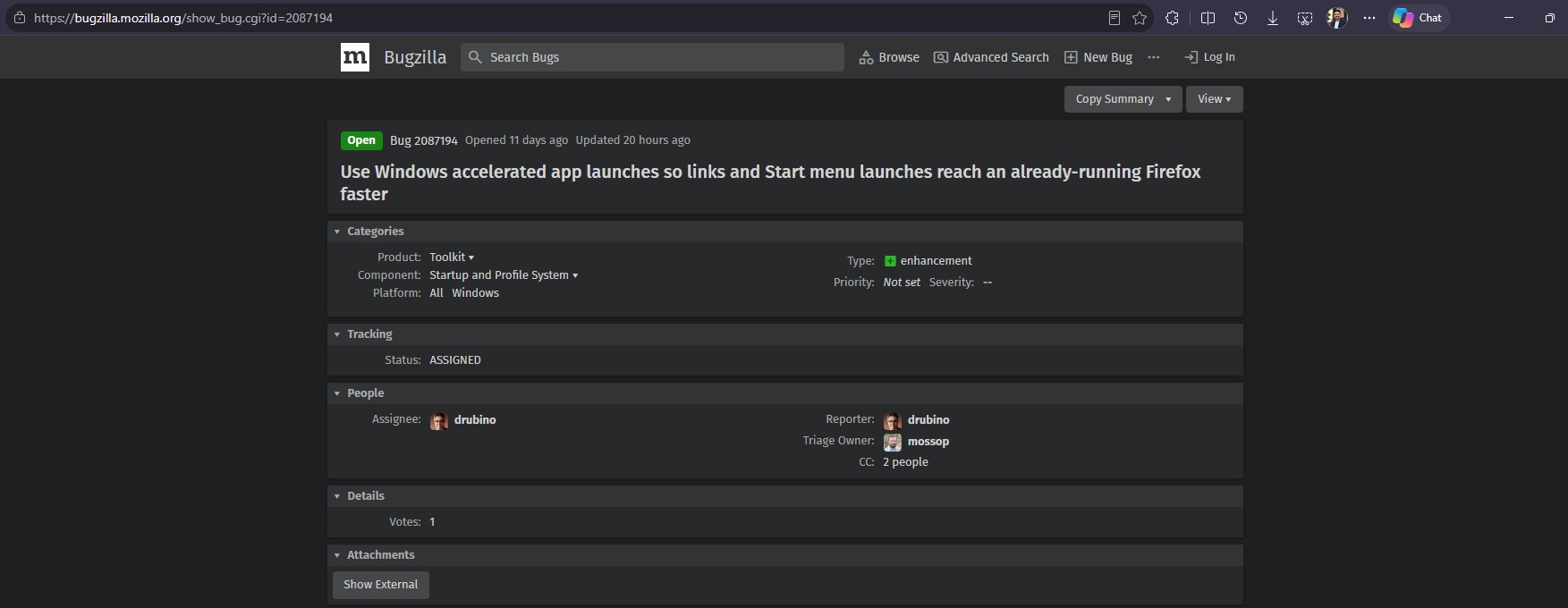
David Rubino, Firefox Senior Staff Product Manager, noted in Bug 2087194, filed in late October, that this is the typical situation for users who keep Firefox open. Enabling Firefox to launch at login makes the scenario even more common.
Rubino previously spent more than 16 years at MS. His work included Windows Explorer and Internet Explorer, followed by more than eight years as Senior Product Manager for the MS Edge team.
The proposed Firefox implementation uses MS’s accelerated app launch API. Because this is a Limited Access Feature, developers normally require an unlock code from MS. Firefox may not need a new code, however, because the code it already uses to pin itself to the taskbar also unlocks this capability.
The reported 3-millisecond result came from a developer’s quick test using a local Firefox build. Start menu launches were also sent directly to the running browser. However, the figure measures only how long Windows takes to transfer the request; it does not mean that Firefox will load web pages 23 times faster.
The feature is not yet available for public testing. The work-in-progress patch is controlled by widget.windows.accelerated_launch.enabled, which is disabled by default and managed through Mozilla’s Nimbus experimentation system.
Mozilla must also determine which Firefox instance should receive a launch request when multiple profiles are open. Another unresolved question is whether MS expects advance notice before Mozilla begins using the feature.
Edge Already Uses Accelerated Warm Launches on Windows 11
MS refers to the feature as accelerated warm launches in its developer documentation. When a single-instance application such as a browser starts, it registers its active window with Windows. Windows can then notify that window directly when the user launches the application from the Start menu or taskbar, or selects a link for which the application is the default handler.
- Before: Windows starts a temporary process, which finds the existing application window, forwards the request, and exits.
- After: Windows sends the launch request directly to the registered application window without creating an intermediary process.
According to MS, removing the temporary process reduces overall latency. However, the API does not support every launch type, source application, or Windows version. Applications must therefore retain their existing single-instance launch code as a fallback.
Edge 150 and later supports the feature on Windows 11 versions 25H2, 26H1, and 26H2 when the October 2026 non-security update or a later update is installed. MS’s Edge team says most users should experience launches that are approximately 15% faster, with improvements of up to 33% under heavy multitasking.
Testing on a virtual machine with only 4GB of RAM showed a noticeable improvement. Launching Edge from the taskbar while MS Store and Paint were open changed from sluggish to considerably more responsive after the update.
The first Edge launch following a restart was not faster because no active Edge instance was available to receive the request. However, Startup Boost often keeps Edge running in the background, meaning many everyday link openings qualify as warm launches.
The final KB5127936 release notes classified the Edge change under Normal rollout. MS uses this designation for features released to all eligible devices simultaneously after gradual testing in the Release Preview channel.
Because KB5127936 was optional, users initially had to install it manually. Its features and changes are scheduled to reach all eligible PCs through the mandatory November 10 Patch Tuesday security update. After that update is installed, Edge should launch more quickly without requiring additional configuration.
Chrome, Brave, and Other Windows Applications Could Follow
Although Edge has faced criticism for being based on Google’s Chromium platform, MS remains one of the leading contributors to the open-source project. Work related to accelerated application launches has also been contributed to Chromium.
As a result, Chrome, Brave, Vivaldi, and other Chromium-based browsers could eventually adopt the same improvement. None has announced support so far, and the capability remains relatively new. Firefox requires a separate implementation because it uses Mozilla’s Gecko engine rather than Chromium.
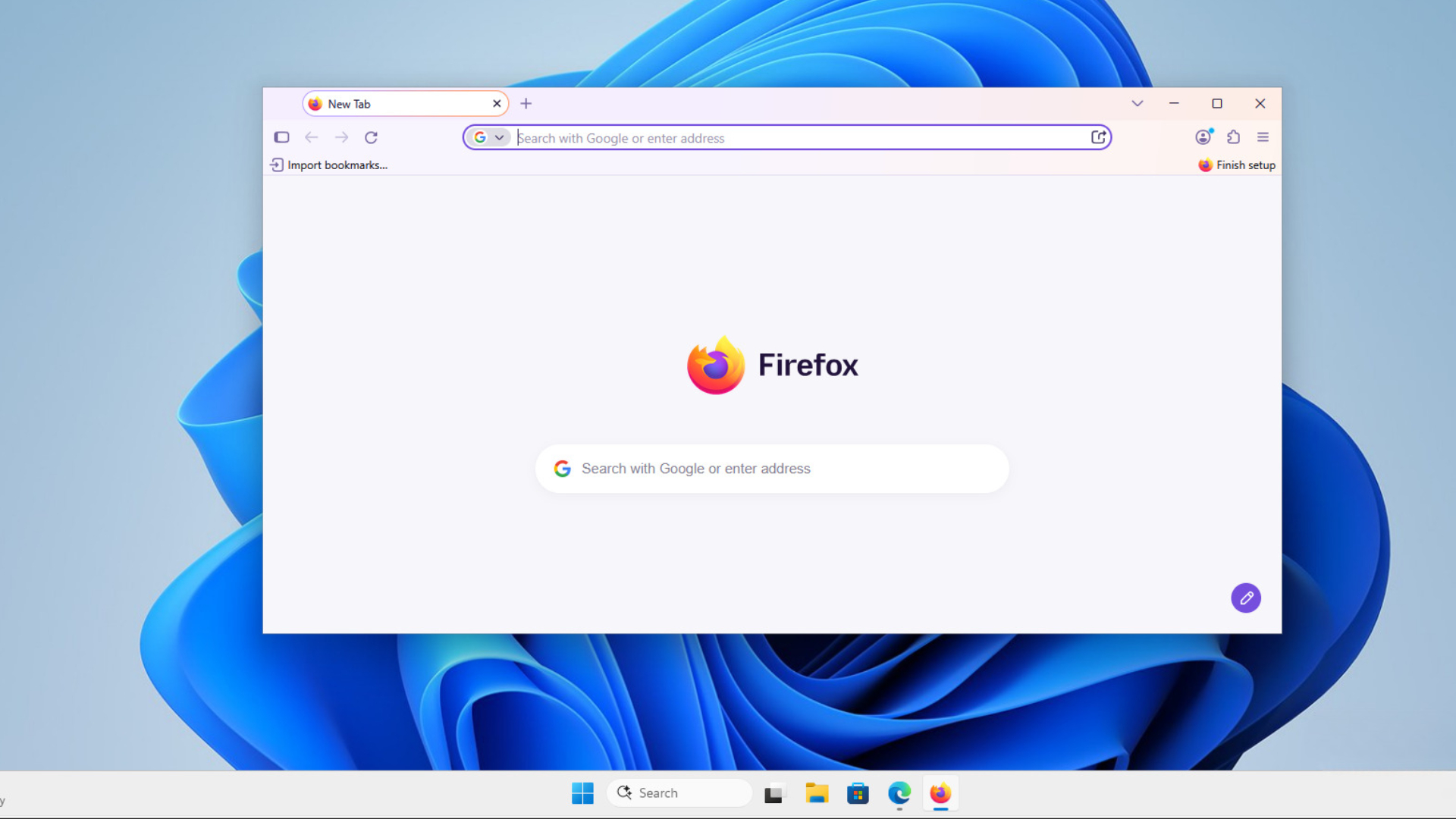
The API is not limited to web browsers. Single-instance messaging applications, music players, and email clients could also use it after obtaining MS’s unlock code, although no developers have confirmed plans to do so. The Edge team is additionally working with the Windows team on other scenarios, including opening PDF files.
MS has often addressed slow application launches by keeping more components loaded in the background, including Edge Startup Boost and preloading for applications such as Word and File Explorer. Accelerated launches take a different approach by eliminating redundant work that Windows does not need to perform.
The remaining question is how many Windows developers, beyond Mozilla, will request access to MS’s accelerated launch capability.