Windows 11 26H2 Improves Performance on PCs With 8GB of RAM
MS says users can now “do more with 8GB” of RAM, and the supporting improvements are already becoming available. According to the company, Windows 11 26H2 and newer versions can make systems up to 40% more responsive, with the most noticeable gains appearing on PCs equipped with 8GB of memory.
Over the past two years, MS encouraged mainstream users to choose at least 16GB of RAM, while positioning 32GB as essential for serious gaming.
With RAM prices rising sharply, MS has resumed selling PCs with 8GB of memory. Its OEM partners are also introducing more 8GB models to compete with the MacBook Neo, which has generally delivered stronger performance than Windows 11 on limited hardware. MS’s latest optimizations are intended to narrow that gap.
Windows still benefits from running on a PC with 32GB of RAM, but the effects of these optimizations are naturally more visible on lower-end systems.
Multitasking Test on Identical 8GB PCs
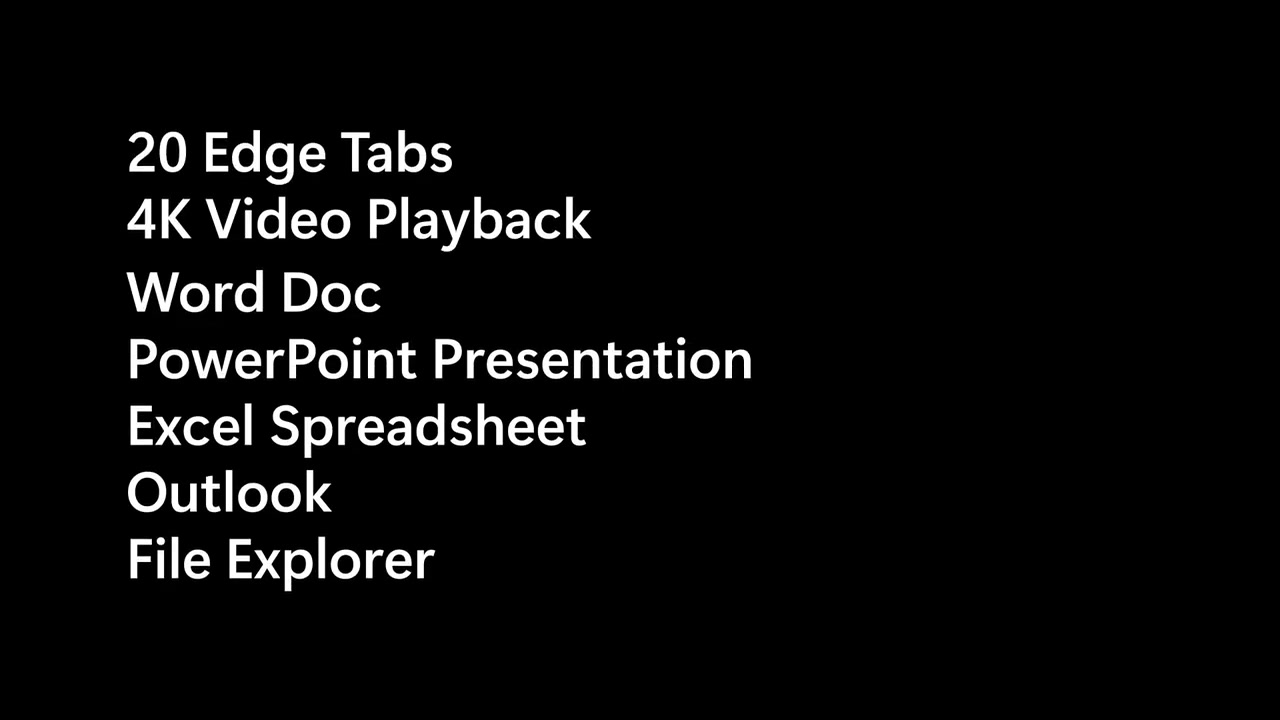
MS tested two PCs with 8GB of RAM by opening 20 Edge tabs, playing a 4K video, and launching a Word document, a PowerPoint presentation, Excel, Outlook, and File Explorer.
The first PC ran the January 2026 Windows 11 update, which predates MS’s March 2026 performance commitments. The second system used Windows 11 26H2, also known as the October 2026 Update.
MS repeated the same workload on both devices, opening Edge pages for fictional brands such as Contoso, VanArsdel, Northwind, Adatum, and Fourth Coffee. The test also included File Explorer, the right-click menu, PowerPoint, Excel, and Word.
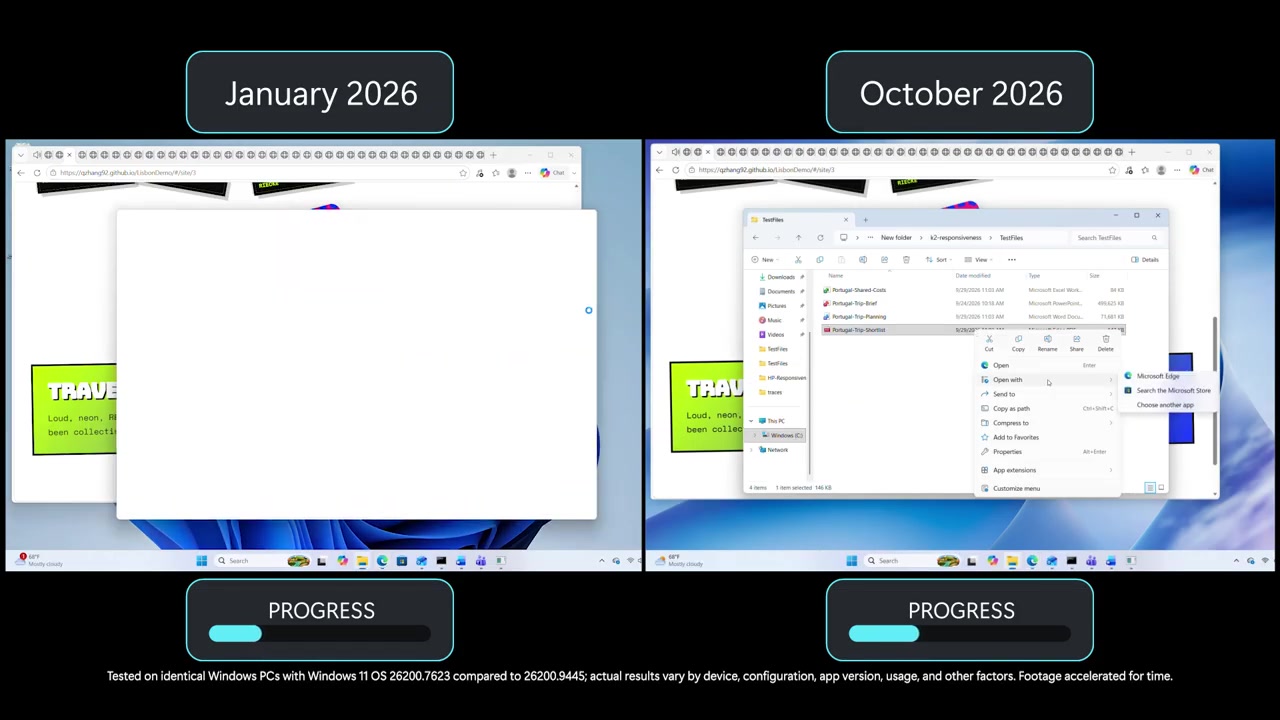
The system running the October update completed tasks noticeably faster. By comparison, the January version frequently paused on blank or loading windows while the newer build had already progressed to the next application.
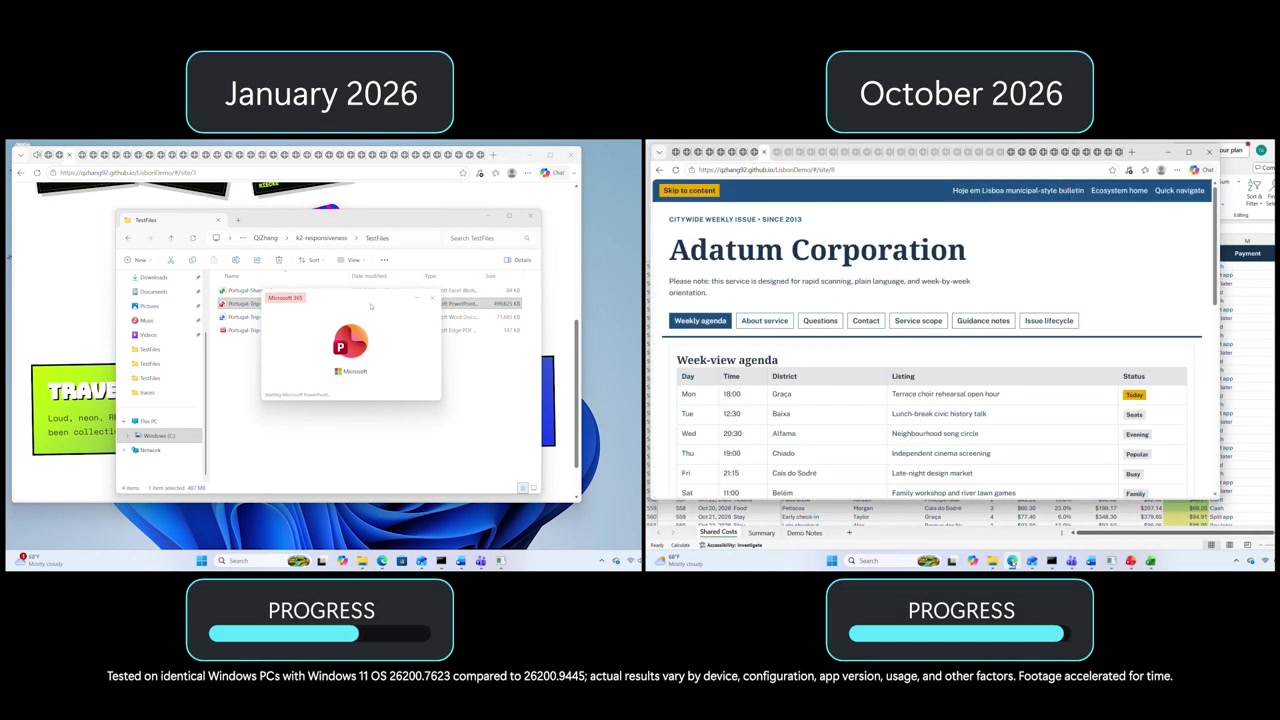
MS stated that the demonstration used identical Windows PCs and compared Windows 11 OS Build 26200.7623 with Build 26200.9445. The company also emphasized that actual results vary depending on the device, configuration, application versions, usage patterns, and other factors. The footage was accelerated to reduce its duration.
Users with different hardware may still experience improvements, but they should not automatically expect 20% lower RAM usage or 40% greater responsiveness after installing recent updates.
Up to 40% Faster Response Times After the October 2026 Update
On the same hardware, MS reports that Windows is significantly more responsive, with performance gains exceeding 40% in certain configurations.
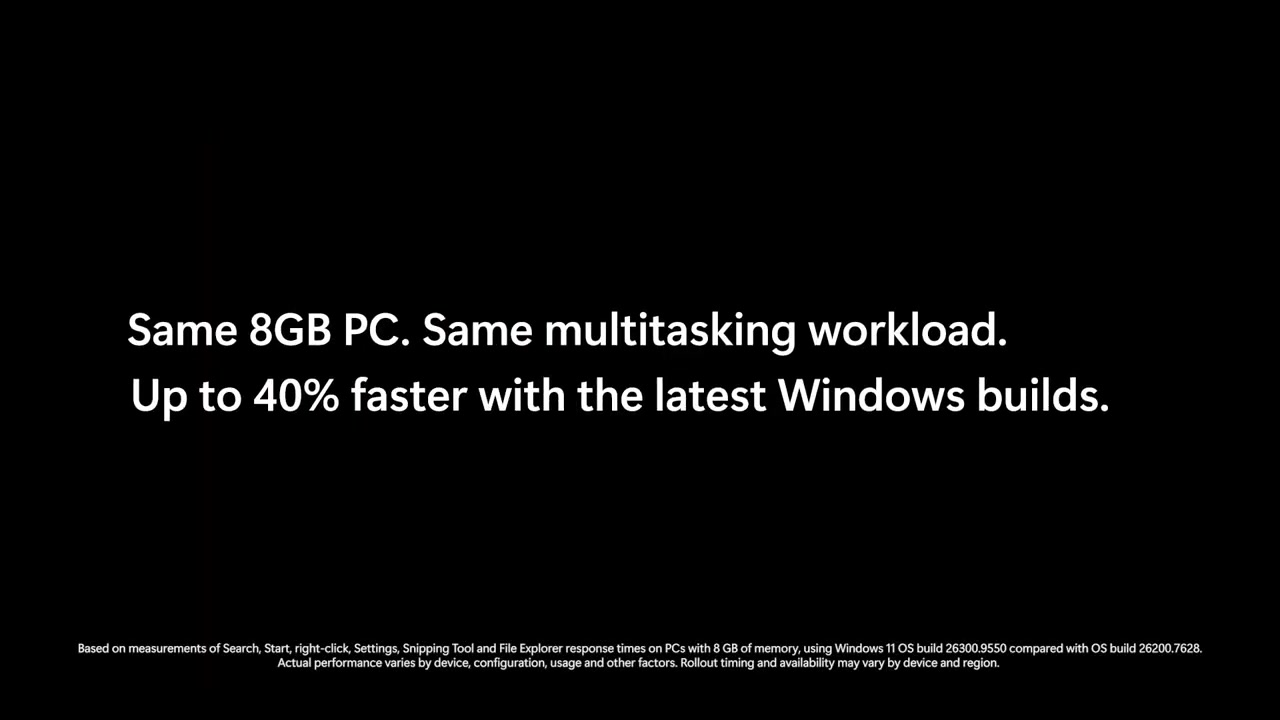
The claim is based on response-time measurements for Search, Start, right-click actions, Settings, Snipping Tool, and File Explorer on PCs with 8GB of memory. MS compared Windows 11 Build 26300.9550, representing version 26H2, with OS Build 26200.7628 from version 25H2.
However, MS cautions that rollout timing and availability may vary by device and region, meaning the changes may not yet be active for every user.
The responsiveness gains may be associated with the Low Latency Profile (LLP), which briefly increases CPU activity to help Windows respond more quickly.
Lower Committed Memory During Multitasking
The demonstration also shows the difference in committed memory increasing as additional applications are opened.
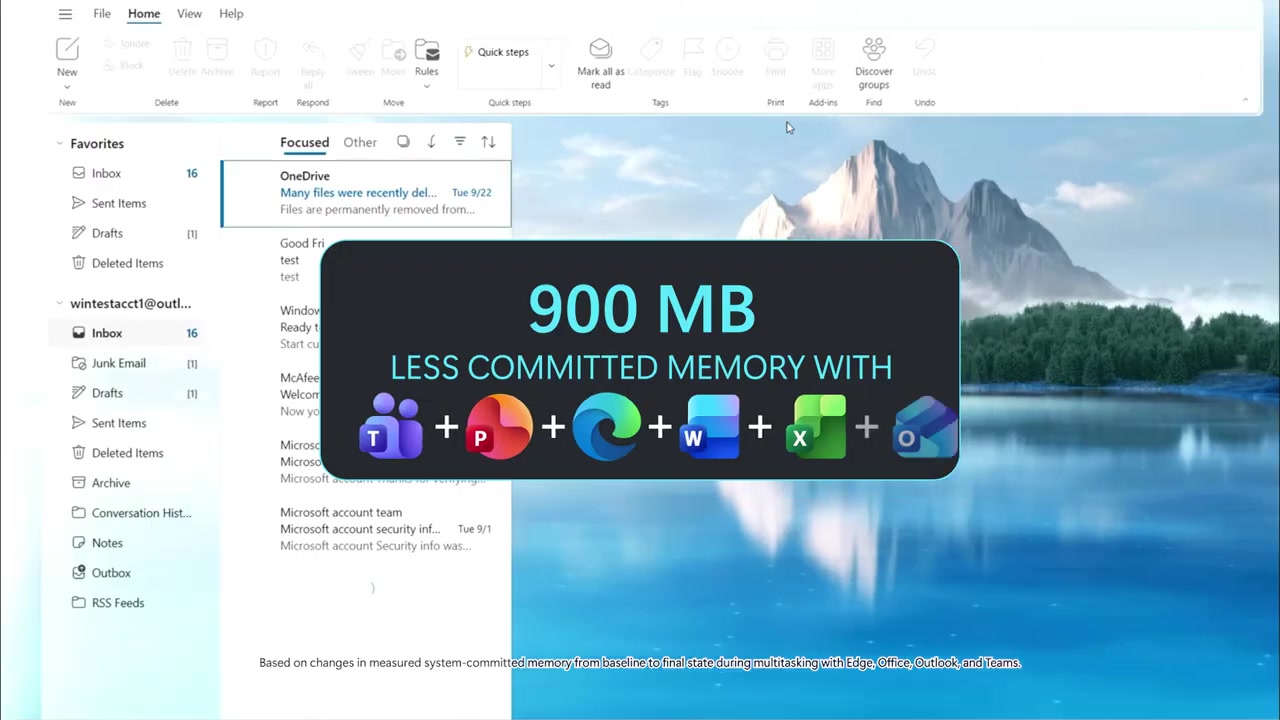
MS says the figures were calculated by measuring the change in system-committed memory from the baseline to the final state during multitasking with Edge, Office, Outlook, and Teams.
According to the company, these applications now use up to 900MB less committed memory than they did in January 2026. That reduction can be particularly meaningful on a PC limited to 8GB of RAM.
Most of these improvements are already available. Users who do not notice a difference may have systems that were not affected by the bottlenecks MS targeted. The gains are most apparent on 8GB PCs, while devices with low-end processors may see less benefit from the Low Latency Profile and may not achieve the advertised 40% improvement in responsiveness.