Discord’s Rust Client Outpaces the Current Electron App
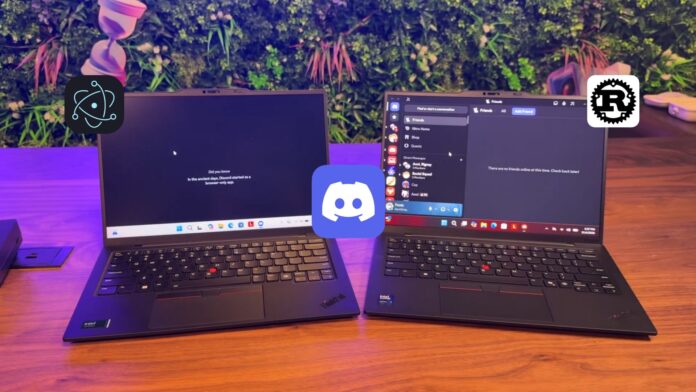
Discord’s upcoming Rust-based client loaded its friends list before the current Electron app moved beyond its loading screen. The comparison appeared in a 15-second video shared on X by Discord co-founder and CTO Stanislav Vishnevskiy. The clip had received 2.3 million views, and Discord employees confirmed that both applications were launched from a cold start.
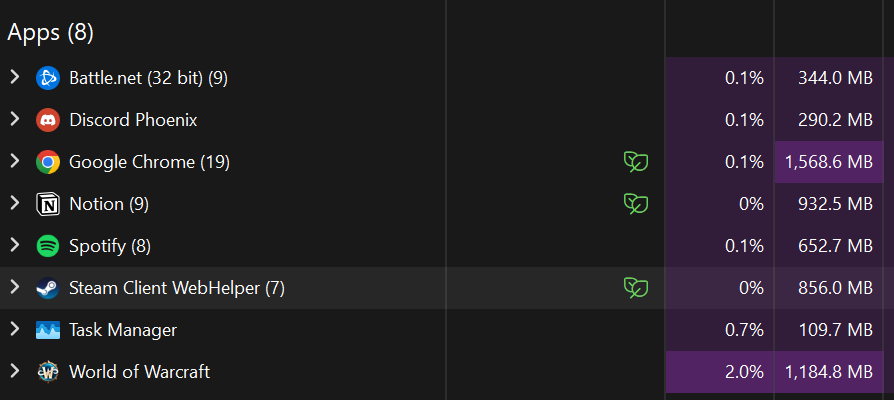
Vishnevskiy also explained that the new client, shown as Discord Phoenix in Task Manager, was using 290.2MB of RAM while running two signed-in accounts simultaneously.
The Rust Client Opens Before Electron Finishes Loading
“The new Discord client using less RAM is just part of the story. Clicking around feels instant, I can’t go back. Check out the boot time,” Vishnevskiy wrote on X. Discord’s official account also shared the comparison, with the current client on the left and the Rust rebuild on the right.
A frame-by-frame review shows that the existing client is opened first. It displays a blank, dark window for approximately three seconds before presenting the message, “In the ancient days, Discord started as a browser-only app.” The Electron application still includes a browser engine today.
The new client is launched roughly 1.5 seconds later, but its window appears within about one second. By the time the older app reaches its main interface—approximately five seconds after launch—the Rust version has already loaded the friends list. Meanwhile, the Electron client briefly displays, “There are no friends online at this time.”
Some viewers questioned whether the new application had simply reopened from the system tray. Coral, Discord’s audio and video lead, rejected that possibility: “Both are cold starts, it’s really that fast. We’ve been using it internally now for a while, and the first time I tried it I thought I’d forgotten to close it when I opened it fresh.”
Travis, who works on Discord’s social and community team and recorded the clip, added that a tray launch would mean “the friends list would have already been loaded.” Vishnevskiy thanked him for finding the older laptops used in the test. The devices were ThinkPads equipped with a Copilot key, indicating that they were released in 2024 or later.
The New Discord App Removes the “Starting” Screen
The current Discord app normally checks for updates and displays a “Starting” screen when launched. One X user said this process “takes like 5–10s every time.” When asked why the new client skips that screen, Coral explained, “It bootstraps so fast and is a new architecture, so we don’t need that modal at all. We auto-update in the background.”

Discord is not currently distributing those updates through the MS Store or Windows Update Orchestration Platform. Coral confirmed this when asked, stating, “We do not at this moment.”
Discord’s Rust Client Uses About 70% Less RAM
When one response described 290MB as excessive for a chat application, Vishnevskiy replied, “Those 4K avatar decorations gotta render somewhere ;) but joking aside, this client is actually running two accounts concurrently, which is supported in the new client.”
Discord’s current Account Switcher allows users to add as many as five accounts and move between them. Asked whether the new client could keep work and personal accounts active without restarting the application between switches, Vishnevskiy answered, “Yup.”
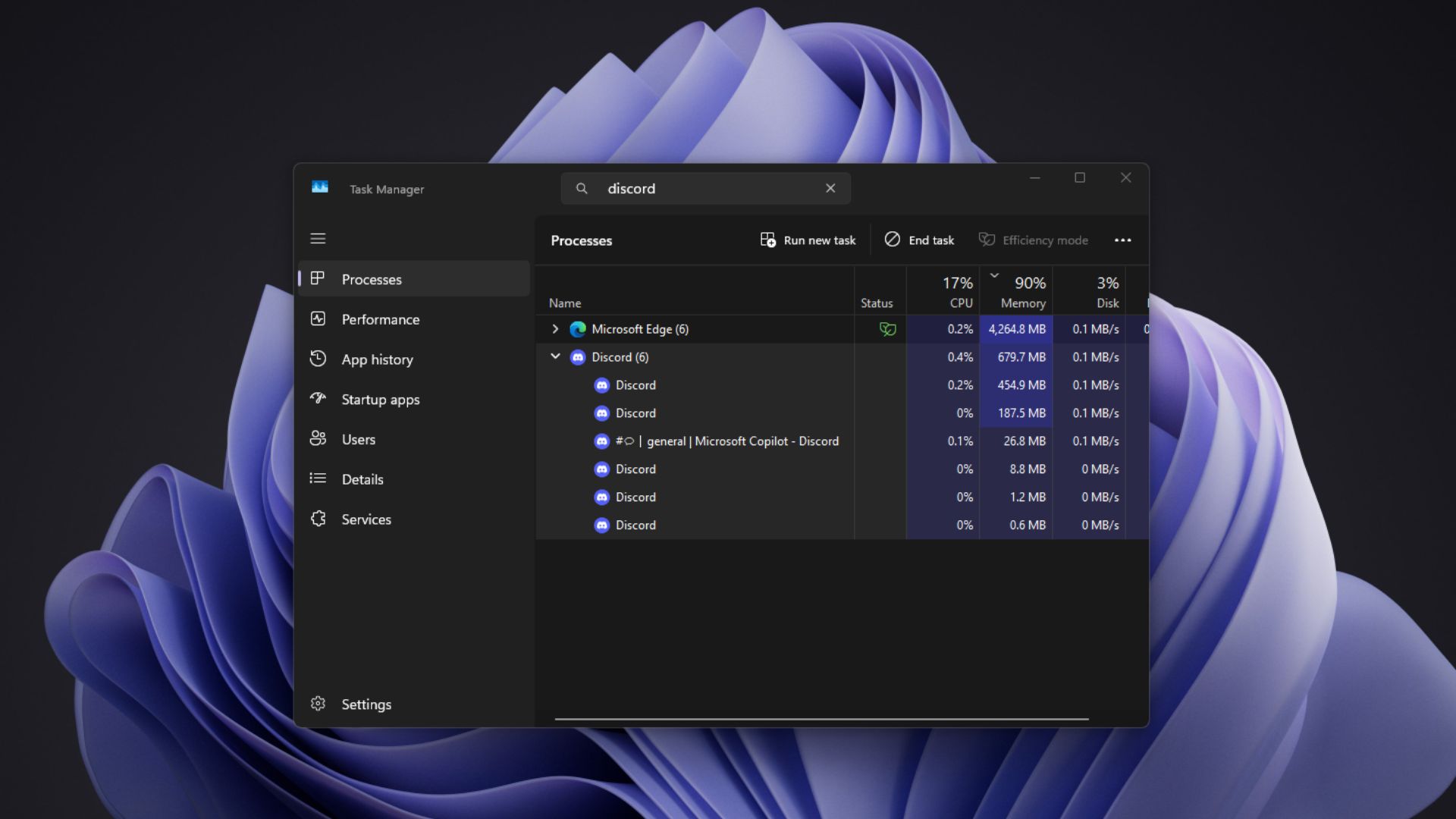
For comparison, a Discord employee stated in December 2025 that typical memory usage remained below 1GB, while the company tested automatically restarting the application when usage reached 4GB. At 290.2MB, the new client’s reported memory use is approximately 70% below the 1GB level. The current Electron application has also been observed idling at between 1GB and 2GB on some PCs.
However, the figure represents a single snapshot from an early build. Discord has not yet published a direct, like-for-like benchmark comparing the two clients.
Discord previously attempted to improve Electron’s efficiency internally. Its September patch notes stated that an upgrade to Electron 42 reduced median CPU usage by approximately 17%, but came “at the cost of a smaller regression to p50 memory usage (~4%).” A Game Mode toggle tested later did not mention RAM usage.
Discord Is Replacing Electron With GPUI, Not Tauri
Electron inherits Chromium’s multi-process architecture. Each Electron application therefore includes its own browser engine, along with a main process and a renderer process for every window.
Many observers expected Discord to choose Tauri, which uses Rust for application logic while building interfaces with HTML, CSS, and JavaScript inside the operating system’s webview. On Windows, that webview is WebView2.
Instead, Discord selected GPUI, described as “a fast, hybrid immediate and retained mode, GPU-accelerated UI framework for Rust.” GPUI was created by the developers of the Zed code editor. It renders the interface directly through the GPU without HTML, while Rust—which Discord has used since 2018—manages memory without a garbage collector.
Discord has not discussed adopting WinUI. MS’s native framework is limited to Windows, whereas GPUI already supports Zed across Windows, macOS, and Linux. Discord maintains its own modifications on top of GPUI, and Vishnevskiy said, “We will see what we can upstream if relevant to the community.”
Web technology will remain where appropriate. YouTube embeds and Discord Activities will use the operating system’s native webview. Referring to Activities, Vishnevskiy said, “We use the native webview similar to Tauri.”
Discord’s Mobile Apps Will Leave React Native Behind
Discord’s mobile applications will retain native interfaces while sharing application code with the desktop client through Rust. Vishnevskiy explained that the iOS app began with React Native, while the Android app was moved to React Native several years later to achieve feature parity because it had consistently lagged behind.
The browser version will continue to render HTML, but its logic will use WebAssembly instead of JavaScript. WebAssembly, or WASM, allows code written in languages such as Rust to run inside a browser, enabling the web application to share Discord’s Rust code.
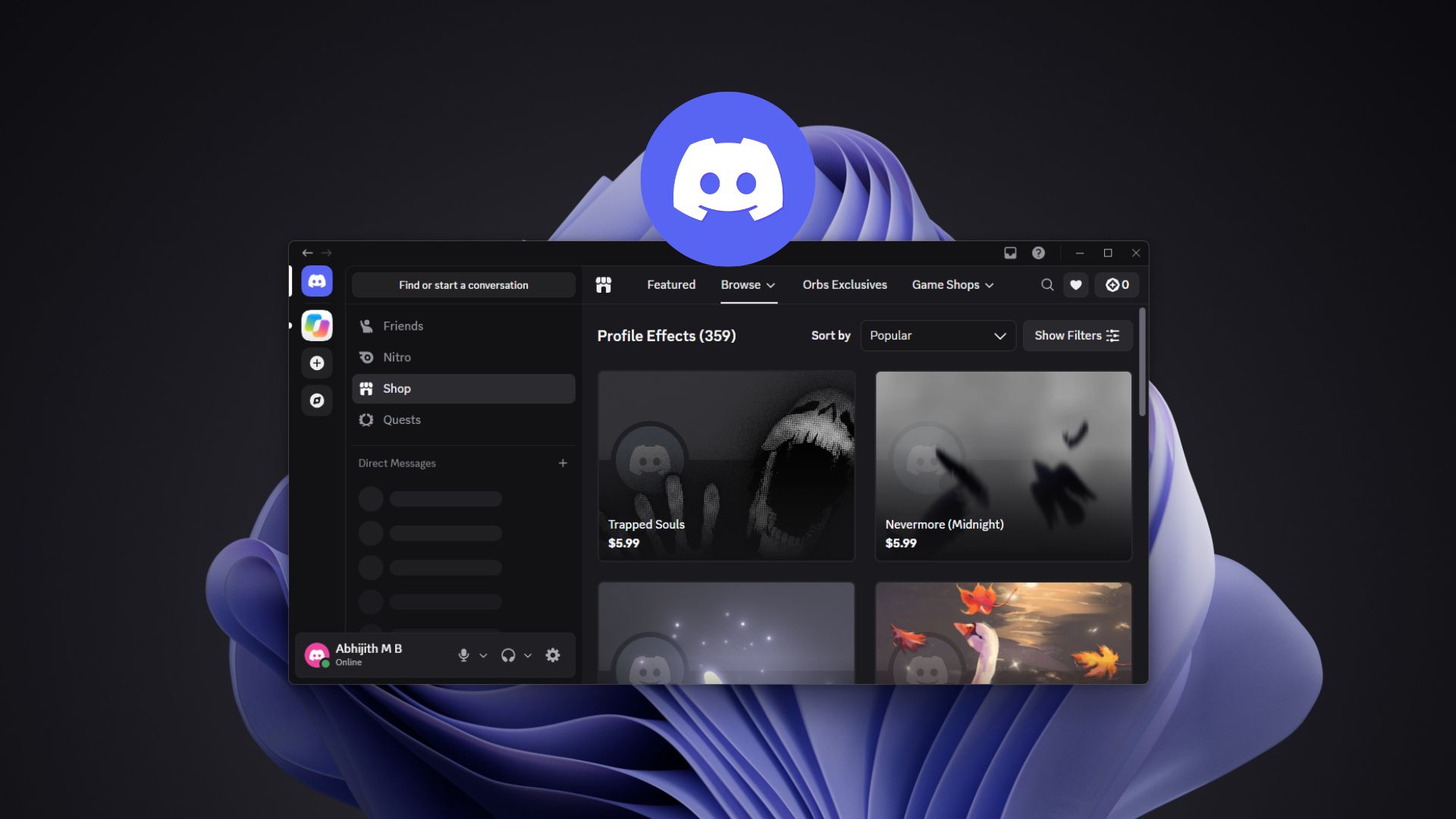
Despite the architectural changes, users should not expect a redesign. Vishnevskiy said, “The app looks and works identically to the current one.”
Private Testing Will Begin Soon
Discord marketing director Ryan K. Rigney said the Rust client would enter private testing soon: “Gonna take our time to make sure it’s stable and secure first. Won’t be long, tho.” Discord has not announced a public release date.
Mark Smith, Discord’s vice president of engineering, emphasized that “accessibility and security are just as important to us as performance.” Coral also confirmed that the new client stores login tokens in the system keyring, which is Credential Manager on Windows 10 and Windows 11.
The project is not limited to Windows. When asked whether the client works on Linux, Rigney replied, “Yes.” Coral also noted that many Discord employees use Macs internally.
Discord Raises the Standard for Windows Messaging Apps
Electron allowed Discord to maintain a single desktop application across Windows, macOS, and Linux for approximately a decade. The company has now demonstrated that a large-scale messaging platform can remove its bundled browser engine without redesigning the user experience.
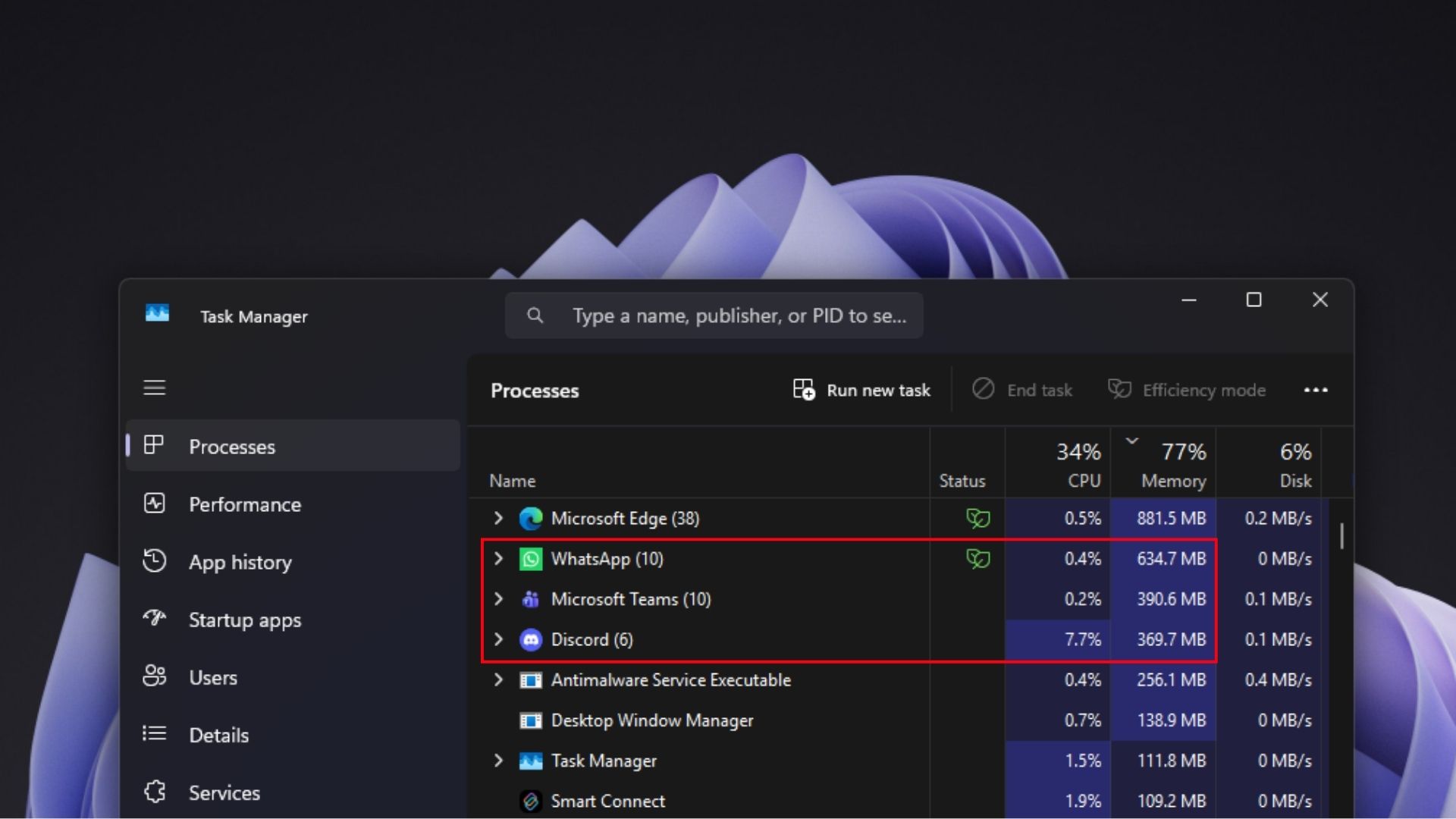
The development also places additional pressure on Meta and MS. WhatsApp moved from a native Windows application that idled below 100MB to a WebView2-based version reportedly capable of using as much as 1.2GB. MS Teams also relies on WebView2 and used 963MB while idle in testing, despite MS’s continued promotion of WinUI.
Growing demand for AI infrastructure has tightened DRAM supplies and increased prices. Windows chief Pavan Davuluri has said that “memory is top of mind for us right now in the industry” as MS works to reduce Windows 11’s RAM usage. Against that backdrop, applications that previously consumed increasing amounts of memory are facing renewed pressure to become more efficient.